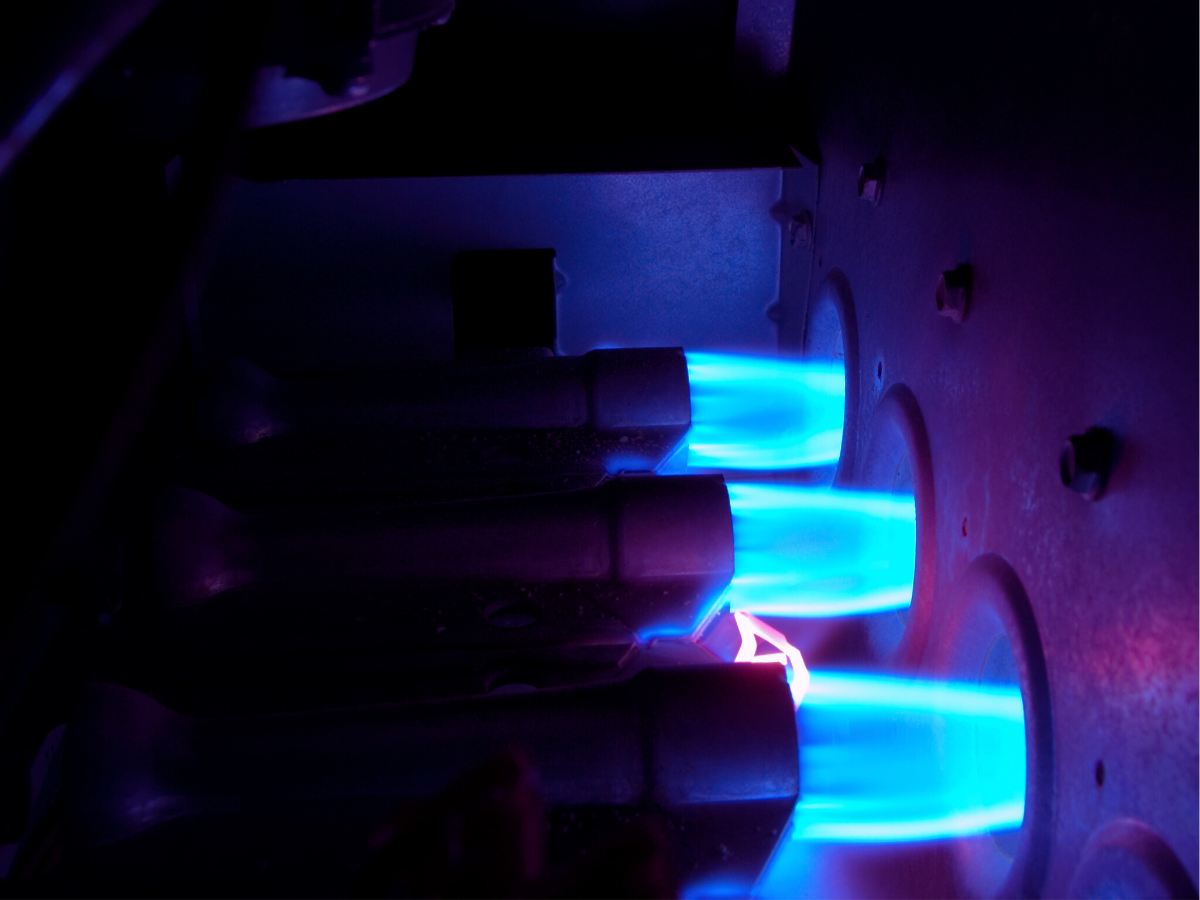
 Within your furnace, an entire world of machinery and delicate parts functions together to ensure a warm, safe home. Because faulty components can lead to electric shock, fires, and other risks, furnaces are designed with safety mechanisms. Learn how to test a flame sensor on your furnace, spot common problems, and know when cleaning won’t fix repeated shutdowns.
Flame sensors are responsible for detecting the unit’s flame. If a problem is detected with the flame, the sensor signals the furnace to shut off as a protective measure.
Malfunctioning or dirty flame sensors can happen from time to time. Fortunately, this common furnace repair issue is relatively simple to repair.
Quick Takeaways
- The flame sensor can detect if the burner flame is functioning.
- When the sensor malfunctions, the furnace shuts off.
- In many cases, flame sensor issues are due to dirt or carbon accumulation on the sensor.
- In order to ensure the safety of your home, family, and furnace, it’s essential to use a multimeter.
- If cleaning and testing the flame sensor doesn’t work, you will need to schedule professional furnace repairs.
What Is a Furnace Flame Sensor and How Does It Work?
When the flame is present, the ionized gas in the flame causes a tiny electrical current that is sensed by the flame sensor. If the current isn’t present, the sensor triggers the furnace to shut off. Otherwise, natural gas will leak out.
Signs a Furnace Flame Sensor May Be Bad
A malfunctioning furnace flame oft shows common signs and symptoms.
- The furnace switches off after a few seconds.
- You notice repeated short cycling.
- The furnace runs for a short period of time, but it never seems to warm up your home.
- Depending on the furnace, you may notice error codes as well.
Safety Steps To Take Before Testing a Flame Sensor
Before trying to test the flame sensor on your own, always shut off power to the furnace and the gas supply. Wait for the furnace to cool completely. Then, put on basic protective gear.
Tools You Need To Test a Furnace Flame Sensor
Gather the following tools to test your furnace flame sensor.
- Multimeter
- Screwdriver
- Flashlight
- Fine, abrasive pad
How To Test a Flame Sensor on a Furnace
You can use the following steps to test the flame sensor. However, this is generally a task that is best left to the experts.
 Step 1: Turn off the Power and Access the Furnace
Remove the access panel to find the burner assembly.
Step 2: Locate and Remove the Flame Sensor
You’ll typically find the flame sensor inside the burner compartment. It is located by the flame.
Step 3: Inspect the Flame Sensor for Dirt or Damage
Look for signs of cracks, corrosion, or carbon buildup.
Step 4: Test the Flame Sensor With a Multimeter
Next, set the multimeter to DC microamps. You’ll need to disconnect the flame sensor and connect one probe to the sensor wire. If the sensor is working properly, you should get a reading between 2 and 6 microamps.
Step 5: Clean the Flame Sensor and Reinstall
To effectively clean the sensor, make sure the gas and power are shut off. Once the flame sensor has been removed, you can clean it with an abrasive pad. The sensor is clean once it is shiny again.
Step 6: Restore Power and Test the Furnace
After you reinstall the sensor, you should reattach the wire. Then, you can replace the furnace panel. If everything is properly put together, you can turn the gas back on and switch the power on again.
What To Do If the Flame Sensor Fails the Test
Cleaning the flame sensor is often enough to fix the problem. If the furnace keeps cycling on and off, it means the sensor needs to be replaced.
Common Mistakes To Avoid When Testing a Flame Sensor
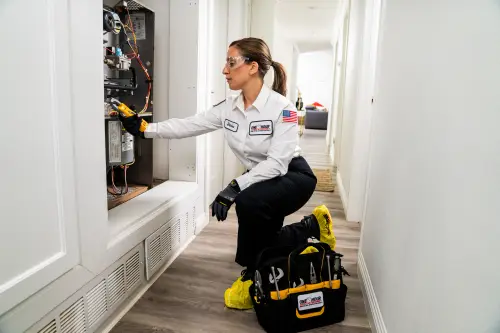 Because of the potential danger involved, it’s essential not to make common mistakes.
- Don’t skip safety steps.
- Make sure to use the right multimeter settings.
- Don’t ignore recurring shutdowns.
- Never overclean because it can damage the sensor.
When To Call a Professional for Furnace Repairs
Give us a ring if you are dealing with repeated shutdowns, electrical issues, or control board malfunctions.
You should always call a professional if you are concerned about a gas leak or gas safety. Additionally, a technician should be in charge of any sensor replacement.
FAQs: How To Test a Flame Sensor on a Furnace
Can I test a flame sensor without a multimeter?
You need a multimeter to test the flame sensor accurately. Additionally, it’s generally better to leave this task to the professionals.
What reading should a flame sensor have?
A functioning flame sensor should have a reading between 2 and 6 DC microamps.
How often should a flame sensor be cleaned or tested?
We recommend having the flame sensor tested at least once per year during your annual tune-up.
Can a dirty flame sensor cause short cycling?
Absolutely. If there is too much soot for it to detect the flame, it can end up resulting in an automatic shutdown.
Is it safe to replace a flame sensor myself?
In general, it is not. The flame sensor is a key safety precaution that should generally be replaced by a professional. Schedule professional repairs if you need a new flame sensor installed.
How much does a flame sensor repair usually cost?
A typical flame sensor repair will normally run around $75 to $250.
Get Help With Your Flame Sensor
 When it comes to your furnace, it’s essential to follow a safety-first approach. If you’re dealing with short cycling, error codes, or soot buildup, we offer 24/7 support.
For fast diagnosis and speedy repairs in Jacksonville and the surrounding areas, give us a call. We’re always on time, or you don’t pay a dime.