Tips For Homeowners on Heat Pump Maintenance
Unlike a furnace or an air conditioner, a heat pump runs all year long. Because of this, it’s especially important to be proactive about your heat pump maintenance. By caring for your unit, you can enhance your family’s comfort, maximize your energy efficiency, and prevent expensive repairs.
Quick Takeaways
- Through routine maintenance, you can enjoy having a reliable, energy-efficient heat pump.
- To reduce strain on the system, clean the coils and the area around your outdoor unit.
- You should remember to schedule at least one maintenance appointment a year, although it’s better to book two appointments.
- Thanks to our unique climate and extended cooling season, heat pumps can develop additional wear.
- Routine maintenance helps you avoid expensive repairs and replacements in the future.
What Maintenance Does for Your Heat Pump
Through routine maintenance, you can extend the lifespan of your unit and reduce the likelihood of a breakdown. Because maintenance boosts your energy efficiency, you will also spend less on your energy bills. More importantly, maintenance tune-ups ensure a consistent level of indoor comfort for your family.
Essential Heat Pump Maintenance Tips Homeowners Should Follow
In order to keep your heat pump in optimal condition, we recommend using the following maintenance tips.
1. Replace or Clean Your Air Filter Regularly
When a filter is clogged, it can limit airflow and lower your overall energy efficiency. Filters should ideally be changed every one to three months.
2. Keep the Outdoor Unit Clear of Debris
There should be at least 2 feet of clearance around your outdoor unit. Remove dirt, leaves, and grass clippings.
3. Clean the Coils for Better Heat Transfer
Because the indoor and outdoor coils can accumulate dirt and debris, they need to be cleaned. Otherwise, the dirt can harm your energy efficiency and eventually result in unexpected repairs.
4. Check and Clear the Condensate Drain Line
If the condensate drain line becomes clogged, it can cause mold growth, humidity issues, and water damage in your home. To prevent these issues, flush the condensate drain line with a cup of vinegar.
5. Inspect Vents and Registers for Proper Airflow
Next, make sure all of your vents are open and unblocked. Closed vents can result in uneven temperatures. Additionally, they can force your system to work harder by causing pressure changes.
6. Monitor Thermostat Settings and Performance
Check your thermostat to make sure it is set appropriately. If the air temperature feels off, use a thermometer to verify the air temperature.
To maximize your energy efficiency, it’s a good idea to consider a programmable or smart thermostat. These devices can help you save money on energy costs and can easily be programmed with your family’s temperature preferences.
Maintenance Tasks Best Left to the Professionals
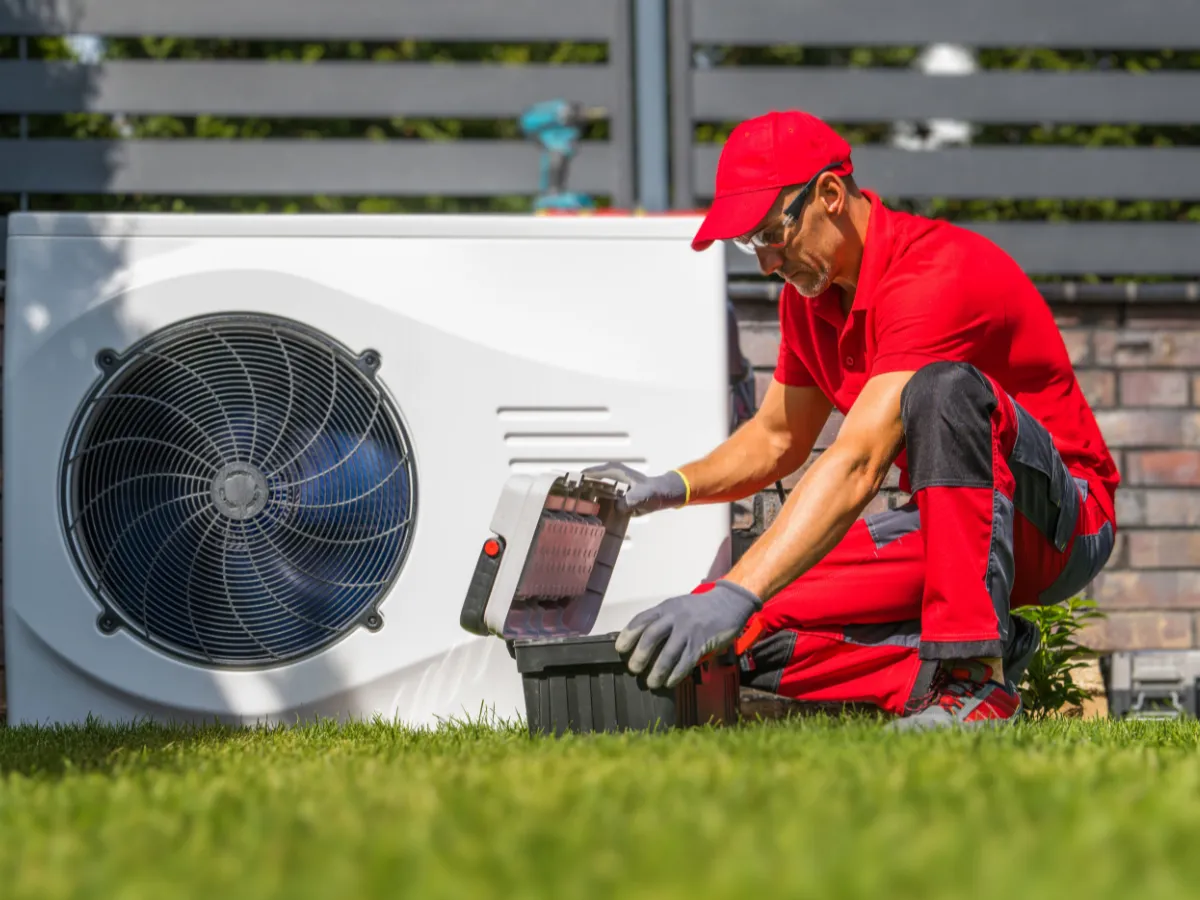
When it comes to routine maintenance, there are a few tasks that are best left to the professionals. Typically, you shouldn’t handle any task that involves electrical components, refrigerants, or mechanical parts.
- Refrigerant level checks
- Capacitor and contactor inspections
- Electrical component tests
- System performance diagnostics
- Deep coil cleaning
How Often Should You Perform Heat Pump Maintenance?
At a minimum, you should book heat pump maintenance at least once a year. However, we generally recommend scheduling a spring and fall tune-up. You use your heat pump during the heating and cooling season, so you need dual tune-ups to manage the added wear.
Jacksonville Climate: Why Local Heat Pumps Need Extra Attention
Local heat pumps require extra attention because our unique climate causes more strain than northern climates. In Florida, we have high humidity levels and a long cooling season. Both of these factors lead to non-stop system usage.
Signs Your Heat Pump Needs Maintenance Now
There are a few common signs that indicate your unit needs immediate maintenance.
- Rising energy bills
- Poor airflow
- Uneven temperatures
- Short cycling
- Unusual sounds
Additionally, you should call us if your system runs continuously.
Common Heat Pump Maintenance Mistakes To Avoid
To keep your heat pump operating as efficiently as possible, there are a few common mistakes that you need to avoid.
- Never skip filter changes. Clogged filters lead your heat pump to work harder and make your components dirty.
- Don’t ignore buildup on your outdoor unit. Your outdoor unit needs proper airflow to work its best.
- Never skip your professional tune-ups. Our team can spot minor problems before they escalate.
- Don’t close too many vents because it increases the pressure within your system.
- Never wait to get help. Heat pumps often show signs of a problem before total failure. Getting help early allows you to fix a minor problem and avoid a complete breakdown.
FAQs
How often should I service my heat pump?
We recommend servicing your heat pump at least once a year. However, a spring and fall tune-up is the best option.
Can I maintain my heat pump myself?
Absolutely. While professional tune-ups should be handled by our team, many routine tasks can be done by homeowners.
What is the most important heat pump maintenance task?
Filter changes are one of the easiest, most effective things you can do to protect your unit.
Will maintenance really lower my energy bills?
Clogged filters, dirty components, and other maintenance issues force your unit to work harder. By fixing these problems, you can improve your unit’s energy efficiency.
Schedule Heat Pump Maintenance With One Hour Heating & Air Conditioning
 At One Hour Heating & Air Conditioning, we serve as Jacksonville’s leading source of heat pump maintenance. We understand Florida’s unique climate and how it impacts your unit’s energy efficiency. As a result, our team knows what it takes to maximize your system’s reliability, efficiency, and long-term savings.
Our punctual team is on hand for all of your heat pump emergencies. We’re always on time, or you don’t pay a dime.
Schedule your next maintenance appointment today.